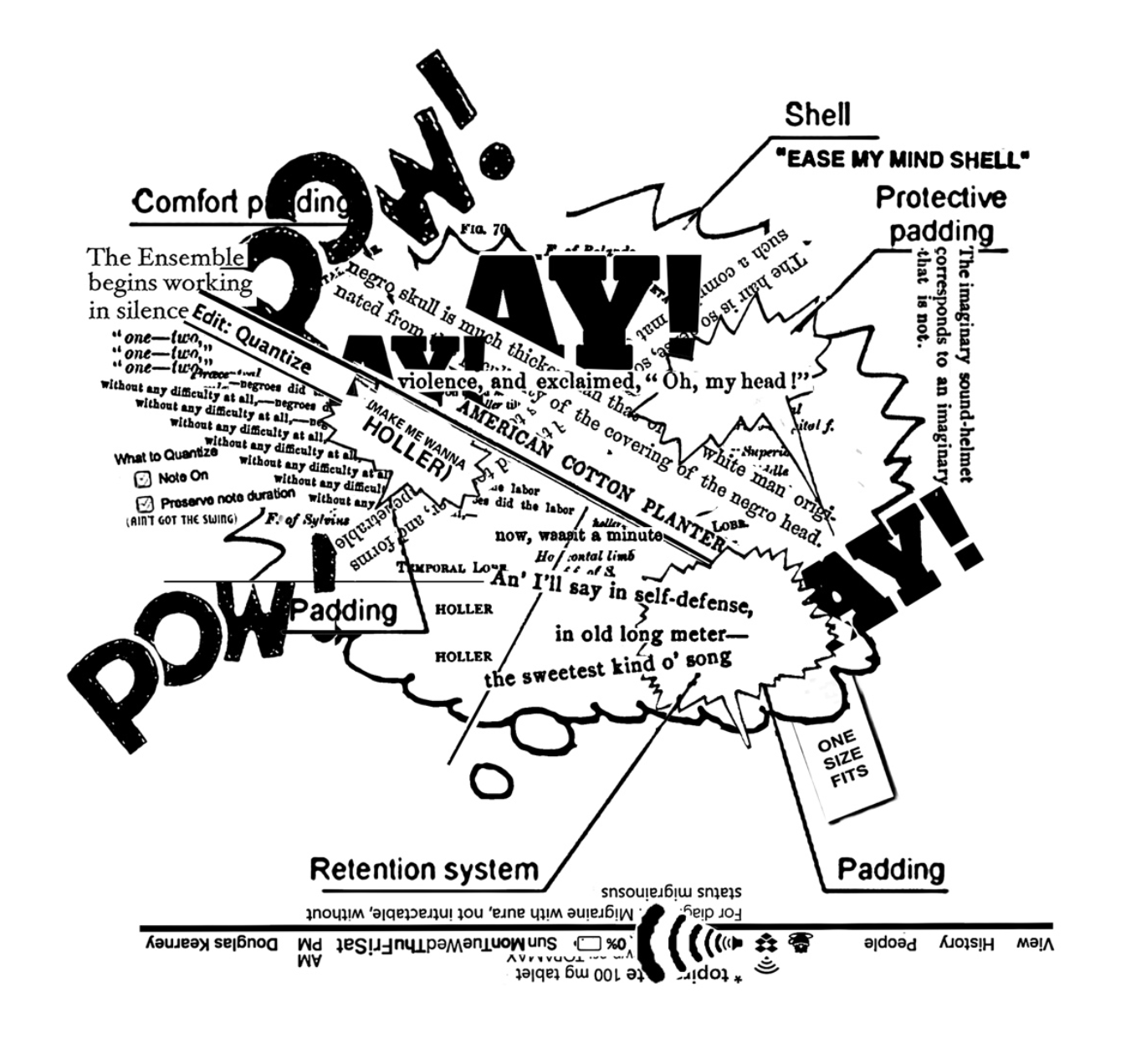
Black Experimental Poetry
Douglas Kearney’s “Ease My Mind Shell”
Course Overview
This course introduced students to a tradition of innovative poetry and poetics from writers across the African Diaspora. Students examine the rich practice of experimentation by Black writers in the 20th and 21st century. Through the study of poetry, performance, visual art, sound, and digital media, students explored how Black writers and artists use experimentation to respond to questions of race, identity, memory, diaspora, technology, and resistance.
The course emphasized close reading, collaborative discussion, and creative interpretation, encouraging students to see poetry as something that extends beyond the printed page.
Teaching Approach
I designed this course to make complex and often unfamiliar material approachable for students while also encouraging intellectual risk-taking and creativity. Because many students entered the course with limited experience reading experimental poetry, I focused on building confidence through guided discussion, low-stakes writing, collaborative activities, and multimodal analysis.
Class sessions combined close reading with visual analysis, listening activities, group work, and discussion of historical context. Students were encouraged to think about poetry not only as text, but also as sound, image, performance, and embodied experience.
Learning Goals
By the end of the course, students were able to:
Analyze experimental poetic forms and explain how they challenge traditional literary conventions
Connect poetry to broader cultural, historical, and political contexts
Interpret relationships between text, sound, image, and performance
Engage critically with themes of race, diaspora, identity, and resistance
Communicate their ideas through written, oral, and creative forms
Digital and multimodal elements
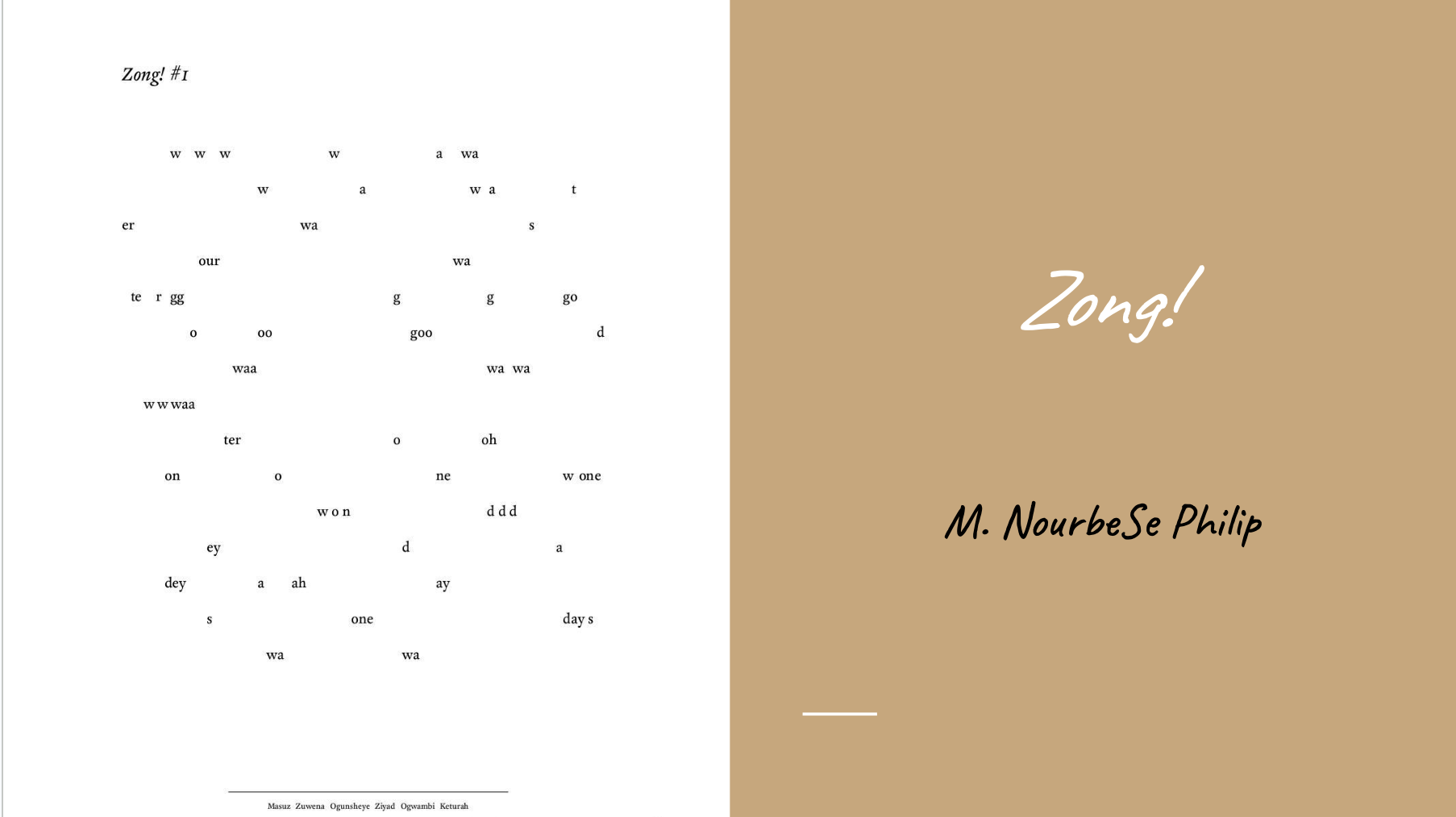
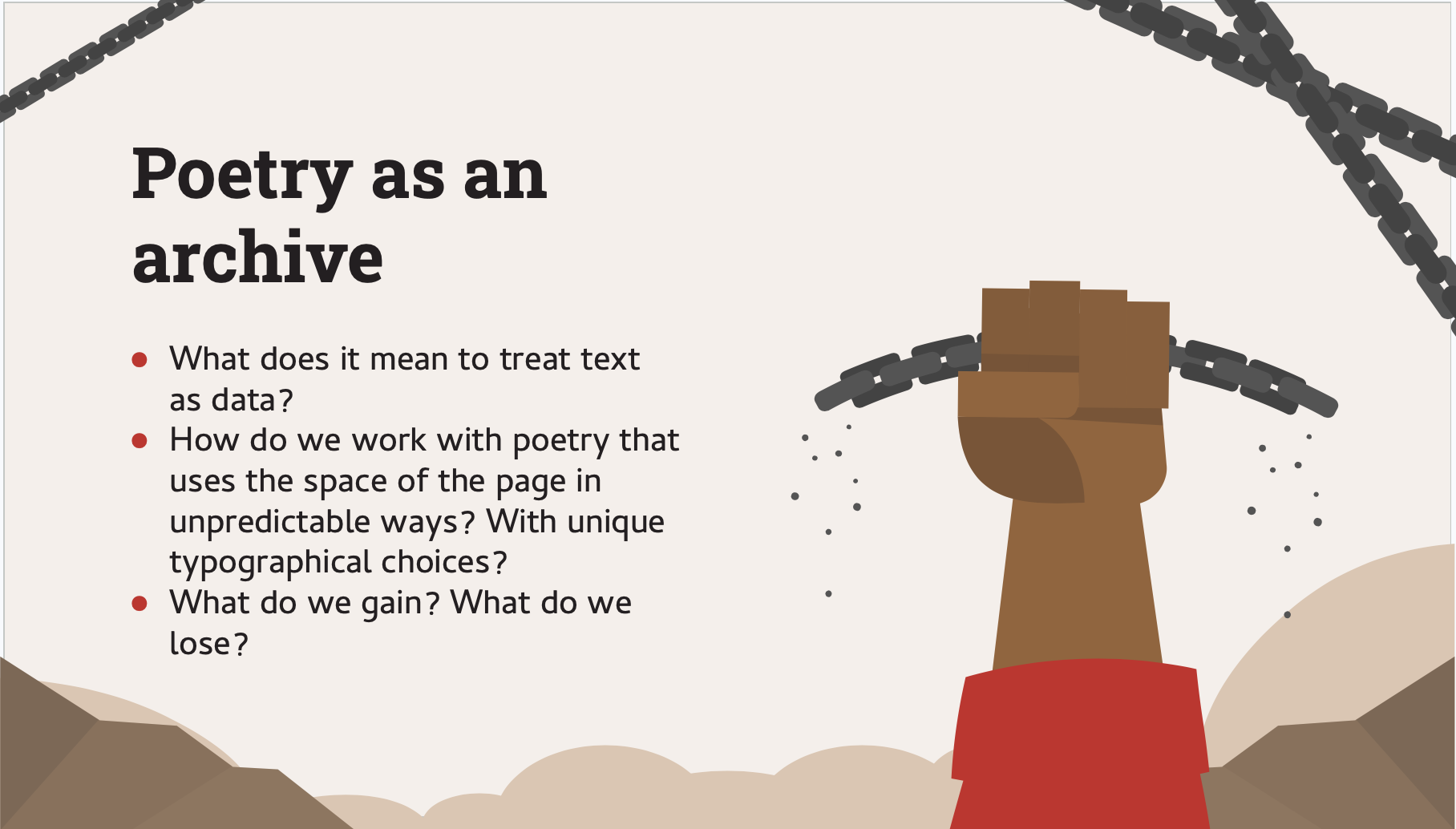
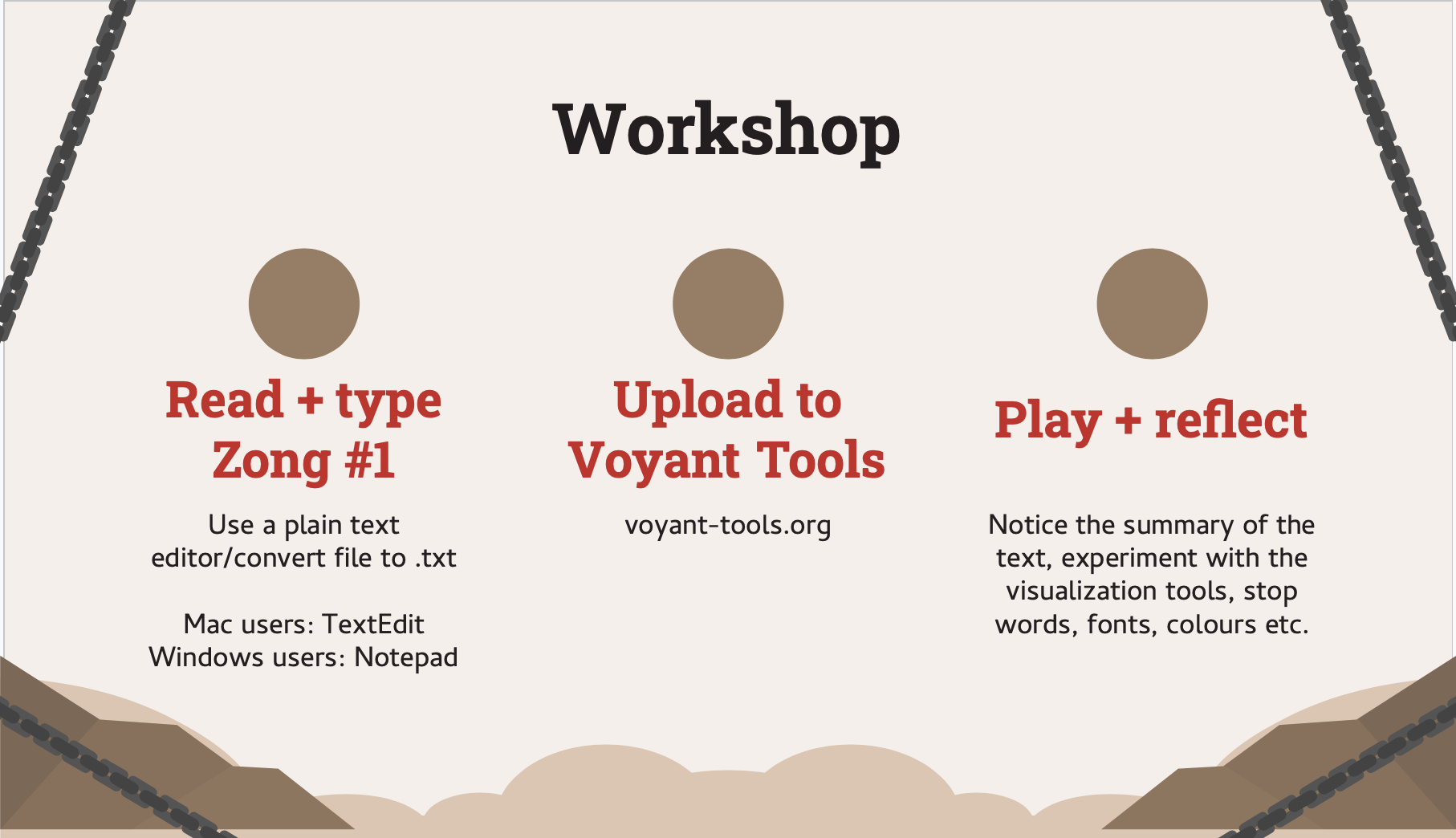
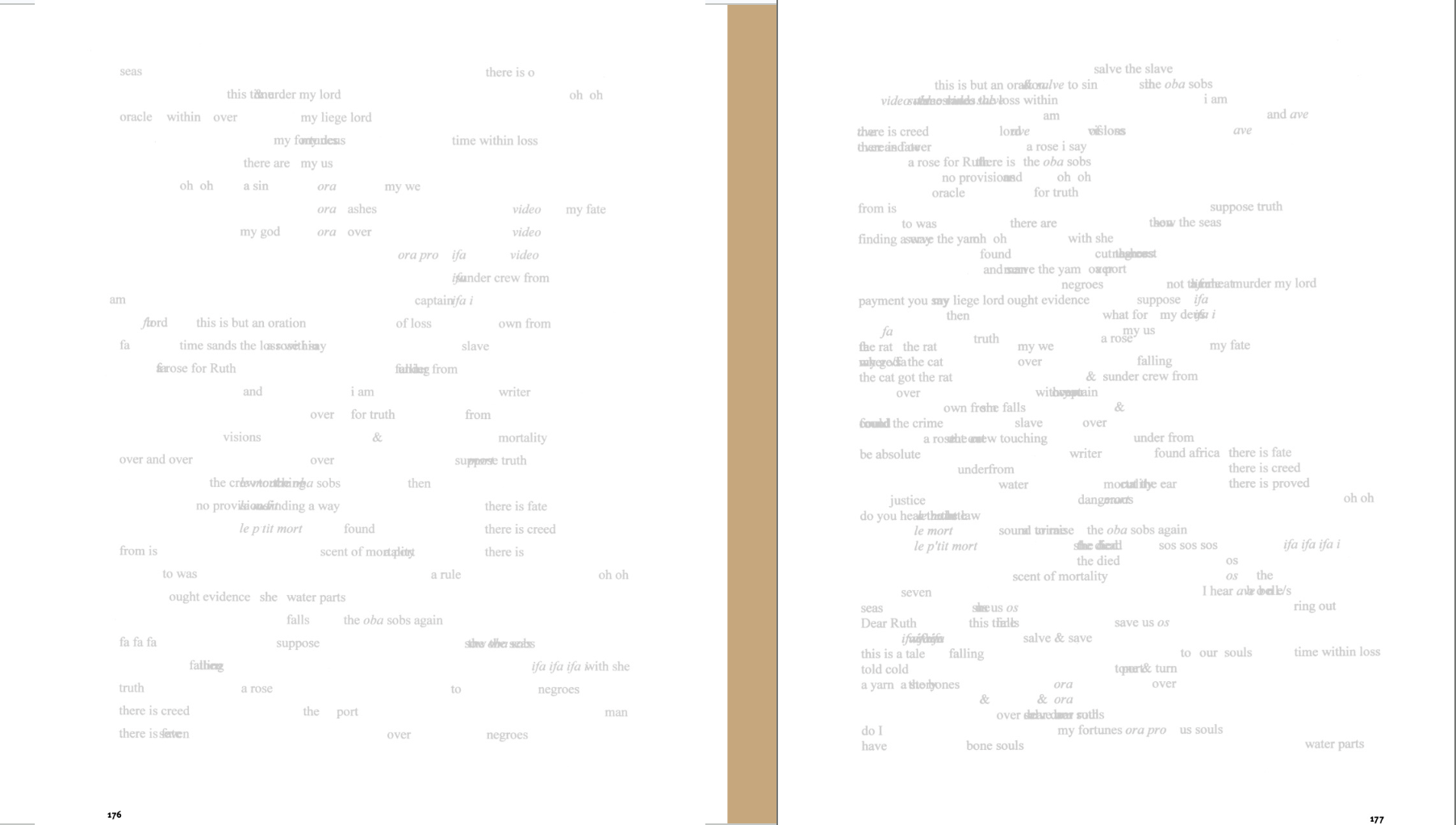
One signature component of the course was a digital humanities workshop on data visualization and archives of enslavement that I adapted from a public-facing workshop offered through the Scholars’ Lab at the University of Virginia Library. In this session, students explored how data, mapping, and visualization can make histories of slavery visible while also raising ethical questions about representation, absence, and archival violence.
The workshop encouraged students to think critically about both the possibilities and limitations of digital tools, particularly when working with histories marked by erasure, fragmentation, and unequal archival records.
This workshop demonstrated my ability to translate public humanities and digital scholarship into accessible classroom experiences that connect literary study with historical inquiry, visual analysis, and digital methods.
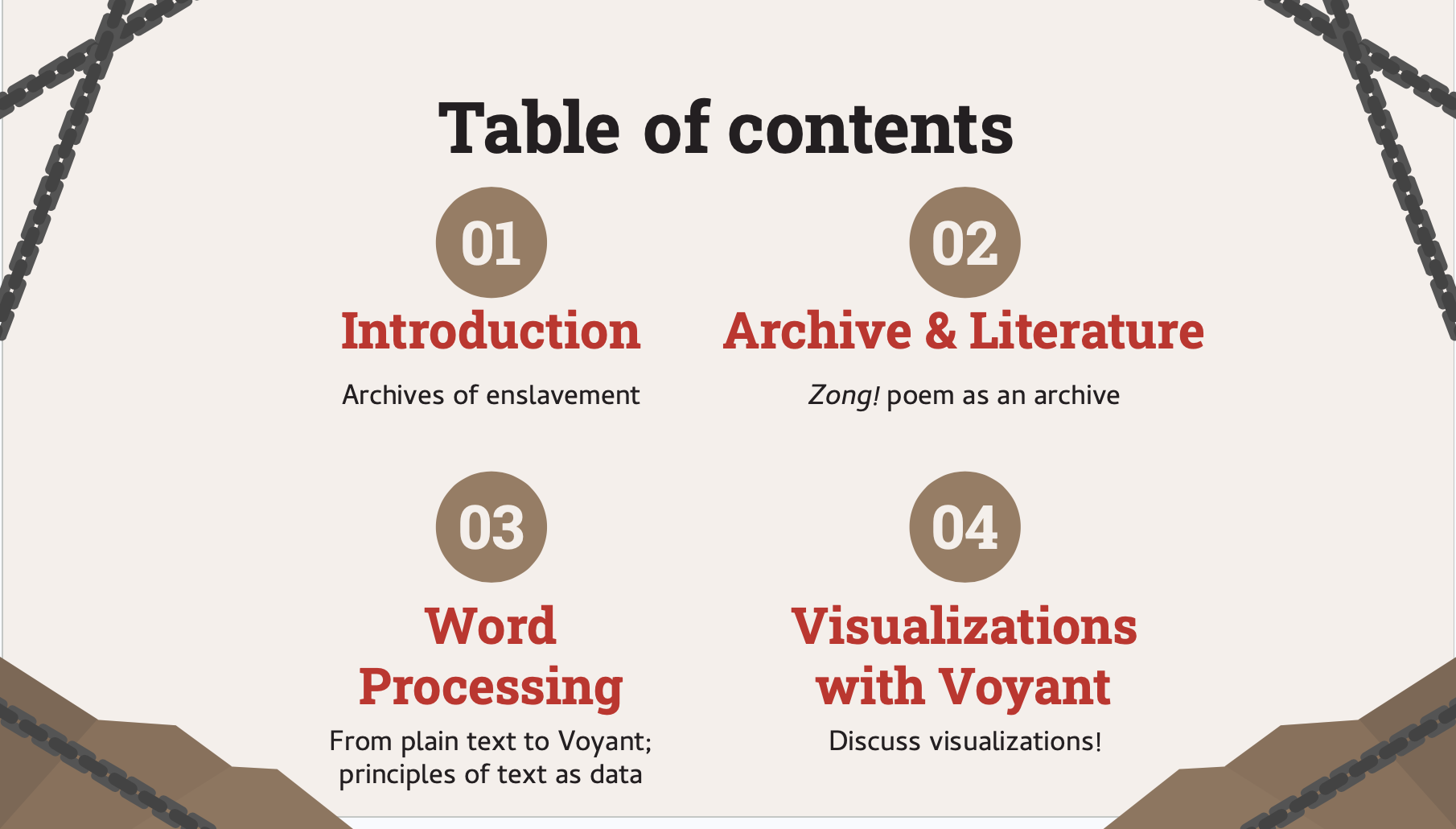
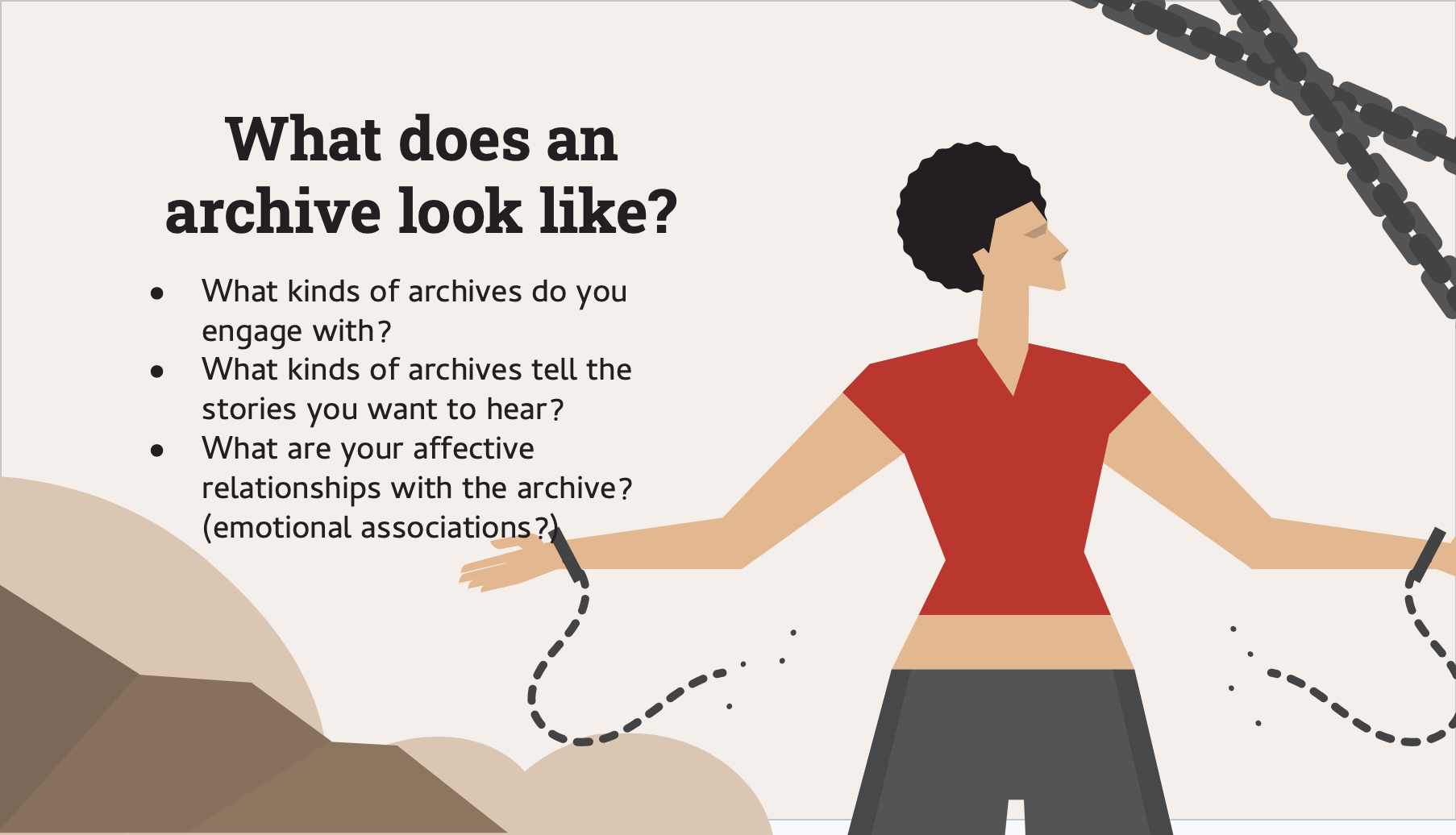
Samples from slide deck
What This Course Demonstrates
Teaching complex material in accessible ways
Designing interdisciplinary and multimodal learning experiences
Facilitating discussion-based classes
Connecting literature to history, media, and visual culture
Supporting creative and critical thinking
Building inclusive, student-centered classrooms